
Overview
What this project was about
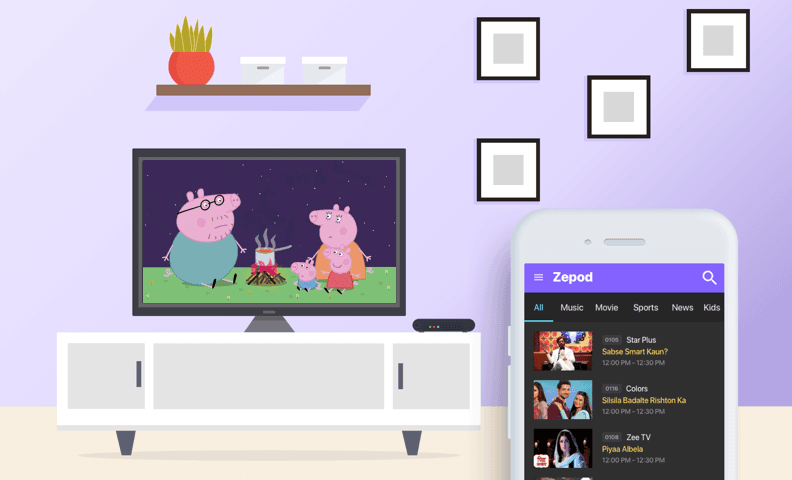
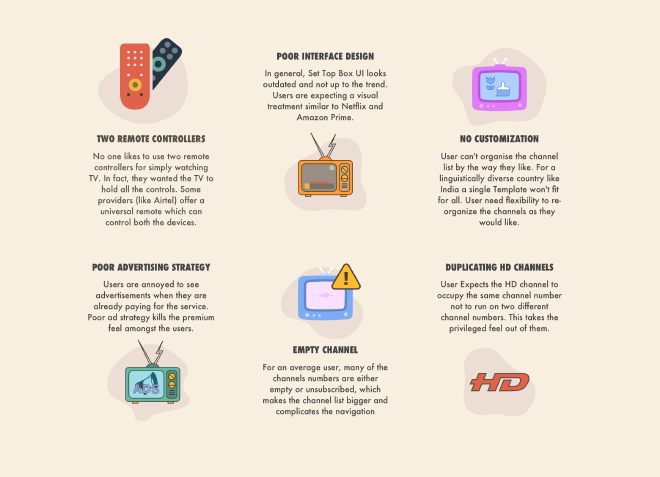
India's satellite television market was losing ground to streaming services. Poor advertisement strategy and limited user privileges had diminished the Set-top box experience — despite it remaining a cost-effective entertainment option for millions. The challenge: design a mobile companion app that made the Set-top box experience modern, interactive, and compelling again.
The Challenge
The Market Context
Streaming services were eroding Set-top box viewership by offering on-demand content, personalisation, and second-screen interactivity. The traditional remote control offered none of this. Yet Set-top boxes remained the primary entertainment source for a large segment of Indian households — cost-effective and already installed. The opportunity was to meet users where they already were (on their phones) and extend the TV experience.
User Research & Discovery
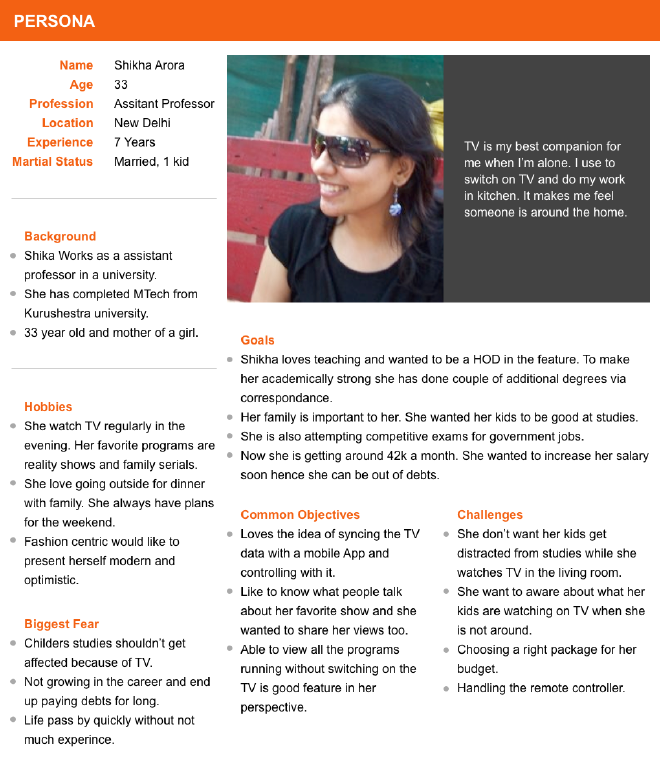
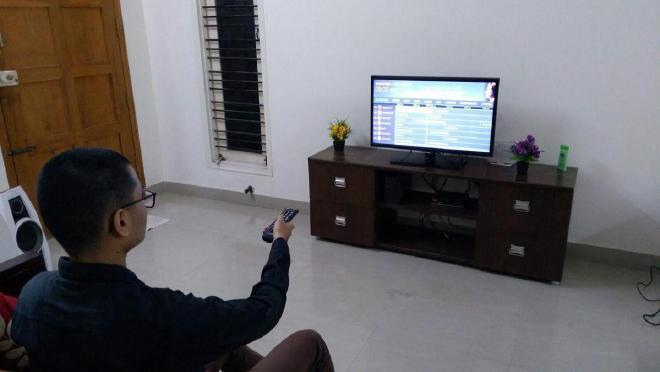
We used a 5-step User-Centered Design methodology. The discovery phase centred on user shadowing at natural locations — observing how people actually used their TV setups at home, what friction they encountered, and what they wished they could do. The target audience was "Highly Desperate Users" (HDU) aged 24–35: people who wanted more from their television experience but were constrained by the hardware they already owned.
Ideation & Feature Design
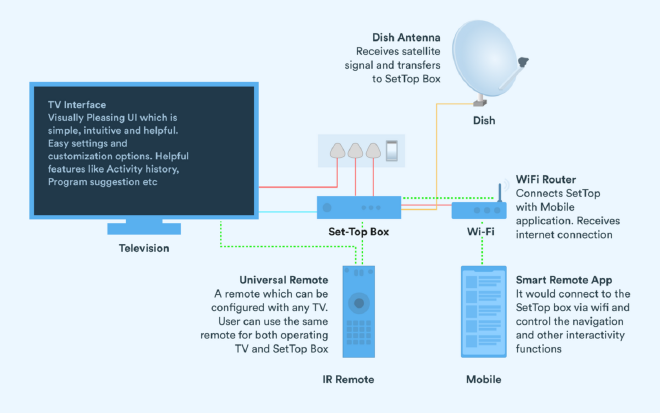
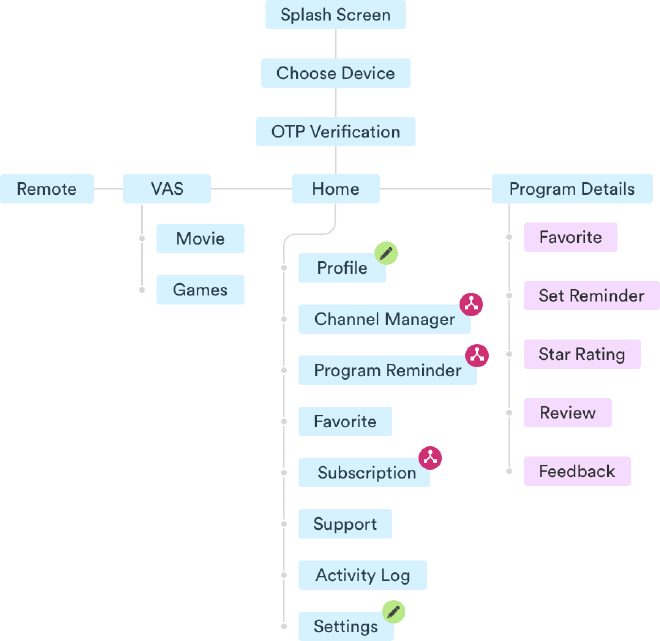
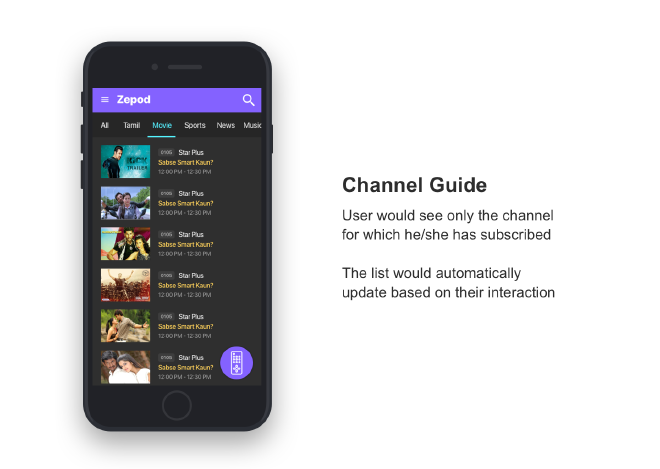
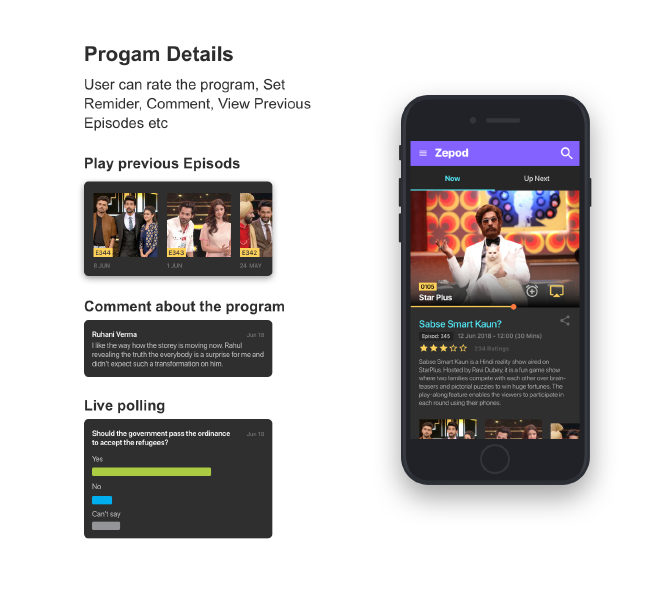
The app was designed around features that genuinely extended the TV experience rather than just replicating the physical remote on a touchscreen. Device pairing via Wi-Fi, program guides with reminders, live polling and comments, ratings and reviews, and multi-TV support were all prioritised based on what users most wanted from a companion experience.
Design & Prototyping
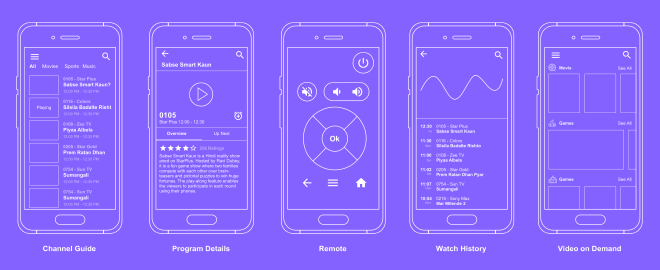
Low-fidelity wireframes mapped core flows before moving to high-fidelity interactive mockups built in Flinto — allowing realistic gesture-based testing that static mockups couldn't provide.
Usability Testing
Participants evaluated 10 core tasks: device connection, program navigation, episode playback, setting reminders, managing subscriptions, account management, and volume control. Users found core functions largely self-evident — a strong signal that the interaction model matched existing mental models.
Results
Outcomes & Impact
Reflection
What I learned
User shadowing in natural environments revealed nuances that lab testing never could. Watching people struggle with their physical remote in real living rooms made the design intuitive when we got there. The 5-phase UCD process felt thorough, but I learned that not every phase needs equal weight—discovery and usability testing justified the heavy lift; prototyping in Flinto for gesture testing was essential. This project also taught me that meeting users' emotional needs (feeling modern, not constrained) matters as much as functional ones.
Interested in working together?
I'm available for freelance design work, consulting, and speaking opportunities.
Get in Touch