
The ability to design with constrained resources represents a highly sought competency for UX professionals. Technology firms increasingly value designers possessing technical expertise who manage projects autonomously with minimal direction.
The era of embedded subject matter specialists answering questions on every team has largely disappeared. Modern designers must independently develop learning strategies and locate necessary information. Fortunately, AI assistants like ChatGPT accelerate research processes, enabling rapid answers to complex questions.
Example Request
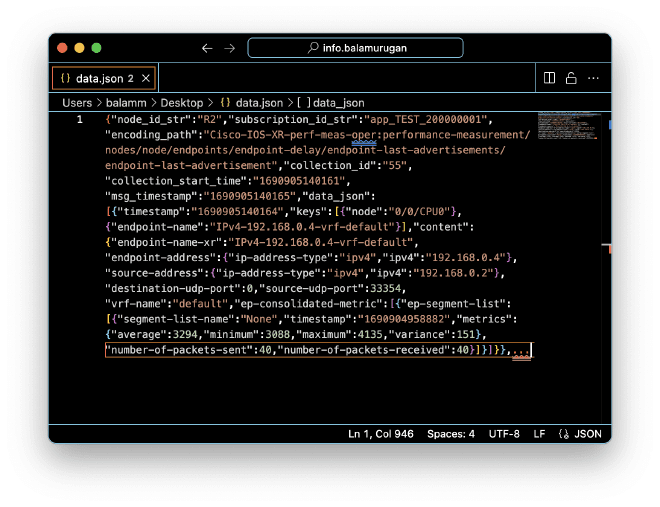
A team recently asked to "show the latency, jitter, and delay for the devices," accompanied by JSON telemetry data. The product functions as a network management platform controlling routers within network infrastructure. These metrics indicate traffic flow quality.
The designer lacked familiarity with this specific dataset, so they utilised ChatGPT by pasting the JSON content and requesting summaries. ChatGPT quickly identified the data as Cisco IOS XR telemetry, describing each parameter comprehensively.
Following thirty minutes of additional research, the designer documented metric calculations and definitions. The design phase then commenced with objectives including:
- Displaying critical metrics prominently on main screens
- Creating time-series visualisations tracking delay metrics
- Illustrating jitter frequency distributions across ranges
- Showing data transfer paths and individual device metrics
- Presenting live session statuses with duration indicators
- Offering consolidated views of all active sessions
- Supporting jitter visualisation on graphs
User Testing Findings
Three Cisco network engineers provided feedback:
- Session Status Clarity: Engineers questioned distinguishing between active and completed sessions, leading to a "Live Sessions" section label with duration displays.
- Consolidated View: Users requested viewing all live sessions simultaneously rather than navigating individual devices, resulting in a dedicated comprehensive page.
- Enhanced Analytics: Engineers requested jitter plotting on graphs to identify specific timing issues and facilitate root cause analysis.
The design completed within fifteen days through independent research and limited stakeholder support, ultimately receiving engineer approval following iterative refinements.
